Neural Radiance Fields
Developer
2026
Neural Rendering, Model Implementation, Training
Python, PyTorch, NumPy, Matplotlib, Viser
Individual project
Overview
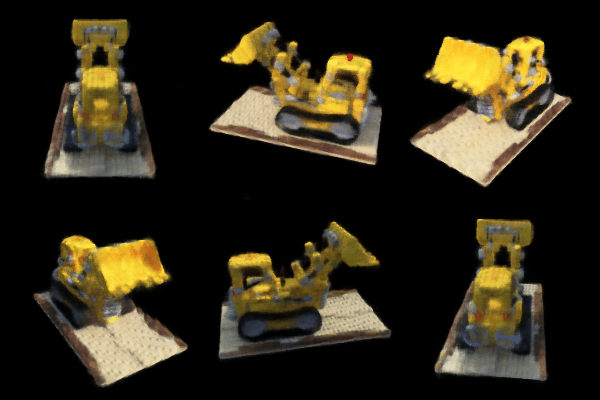
Implemented neural fields in two settings: mapping 2D pixel coordinates to image color, then learning a Neural Radiance Field (NeRF) for novel-view synthesis of a multi-view Lego scene reconstructed by COLMAP.
Implementation choices and results are documented below.
Part 1: Fit a 2D Neural Field
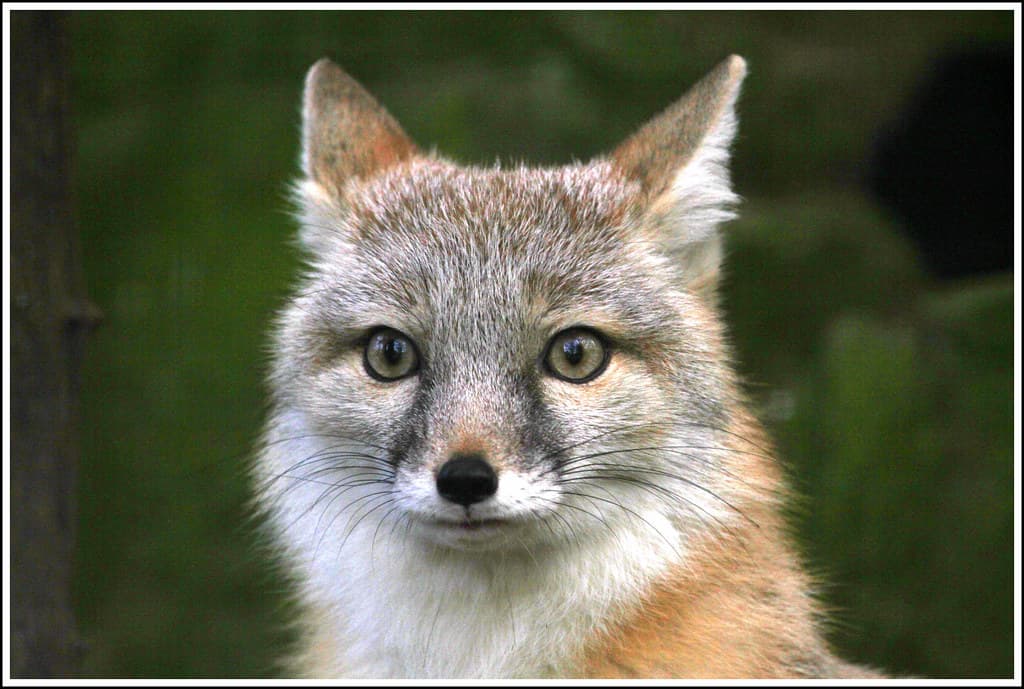
A sinusoidal positional encoder transforms a pixel coordinate (u, v) into 42 dimensions using the original coordinates plus sine/cosine terms through L=10. A four-layer width-256 MLP with ReLU activations maps the encoding to RGB through a Sigmoid output.
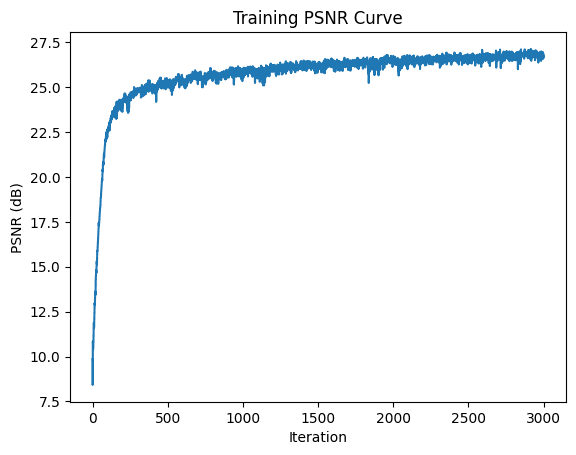
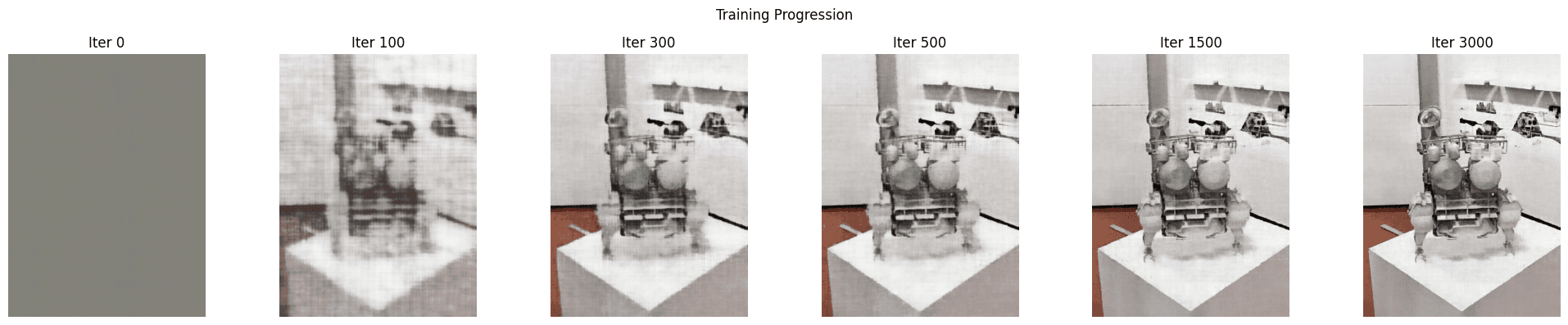
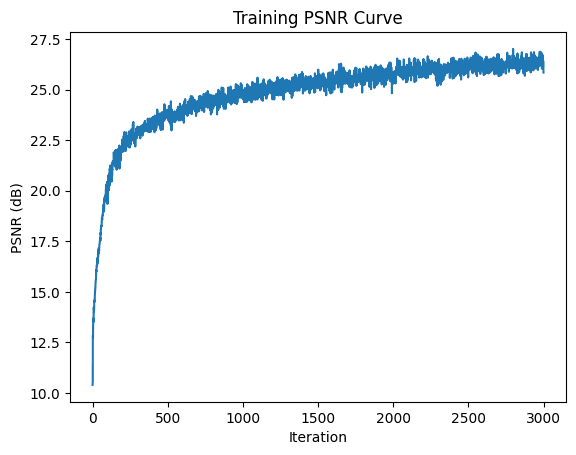
At each iteration, 10,000 normalized pixel coordinates and colors are sampled. Adam (lr 1e-2) and MSE loss train the model for 3,000 iterations. Reconstructions become recognizable around iteration 300, resolve finer details by 1,000, and reach approximately 27 dB PSNR by 3,000.
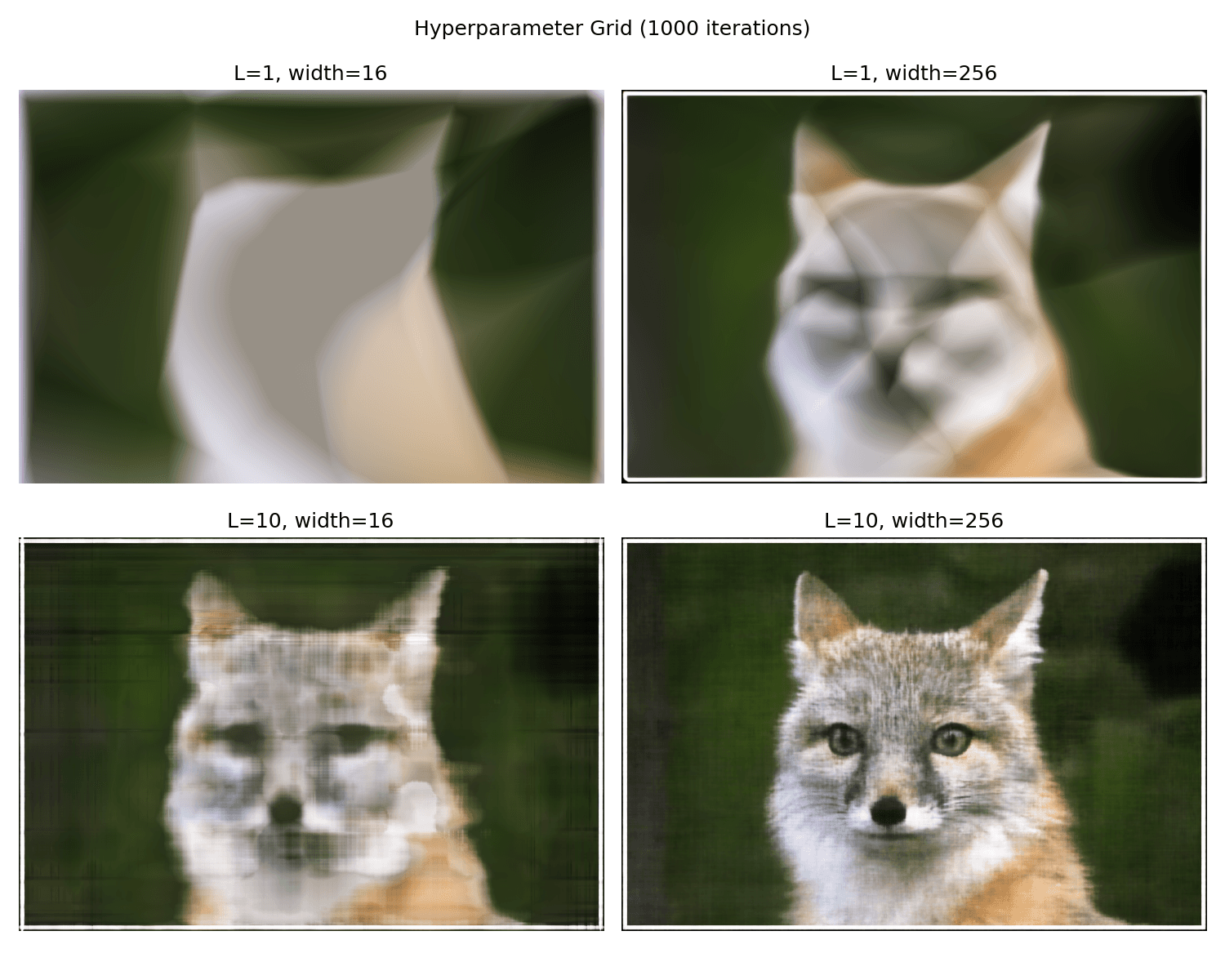
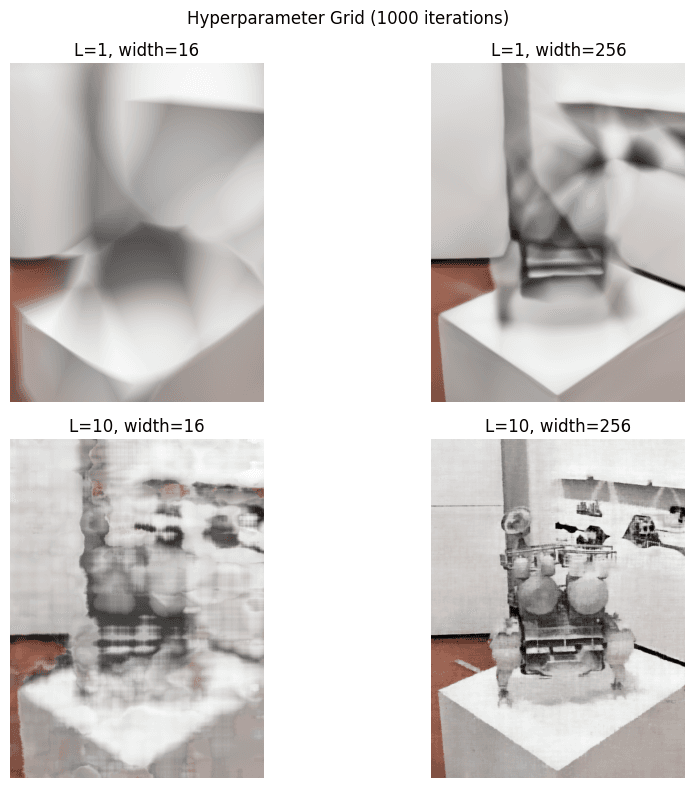
A 2×2 sweep showed that L=1 produces only low-frequency blurry results regardless of width; L=10 with width 16 lacks capacity and artifacts remain; L=10 with width 256 captures the sharpest high-frequency detail.

Part 2: Multi-View Neural Radiance Field
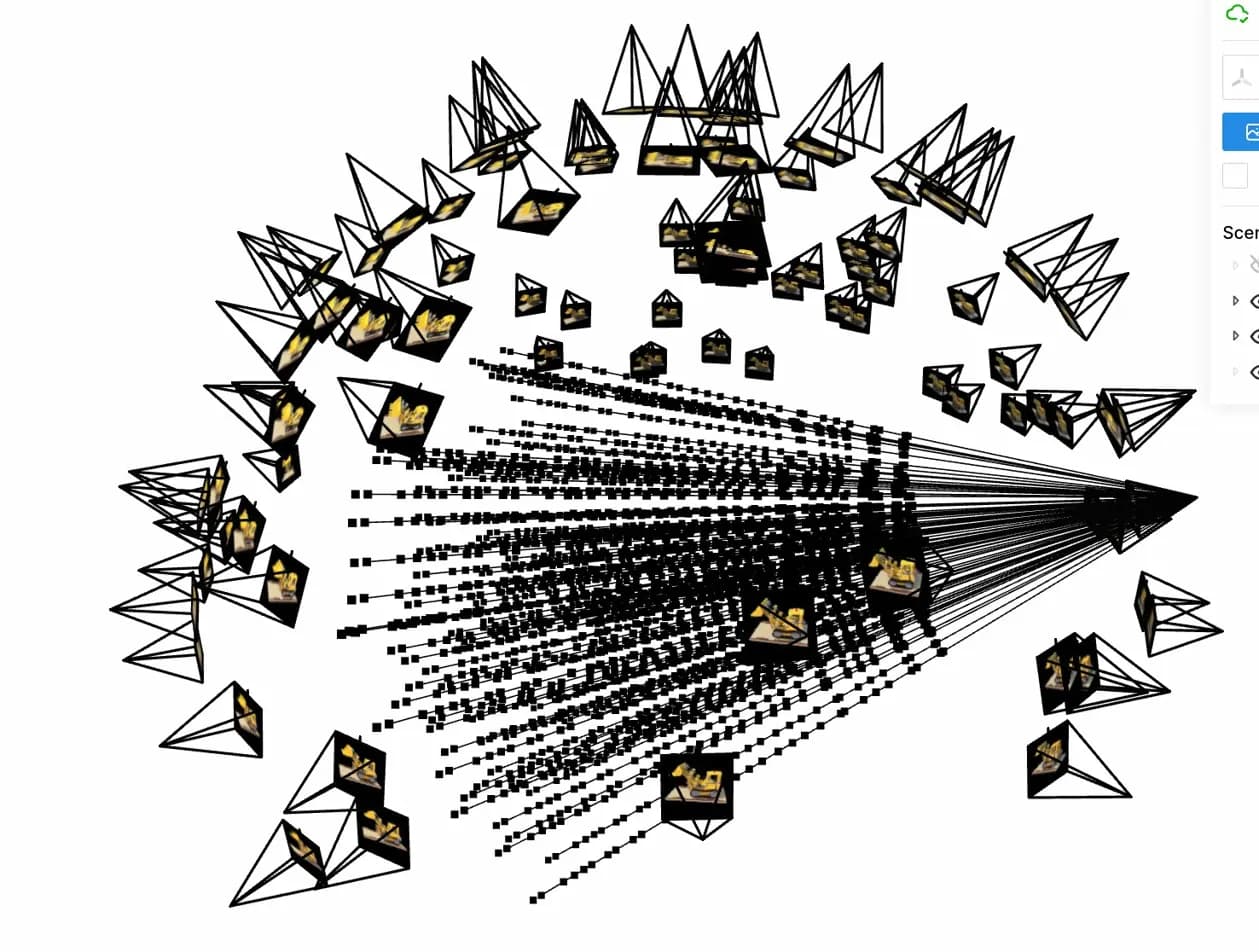
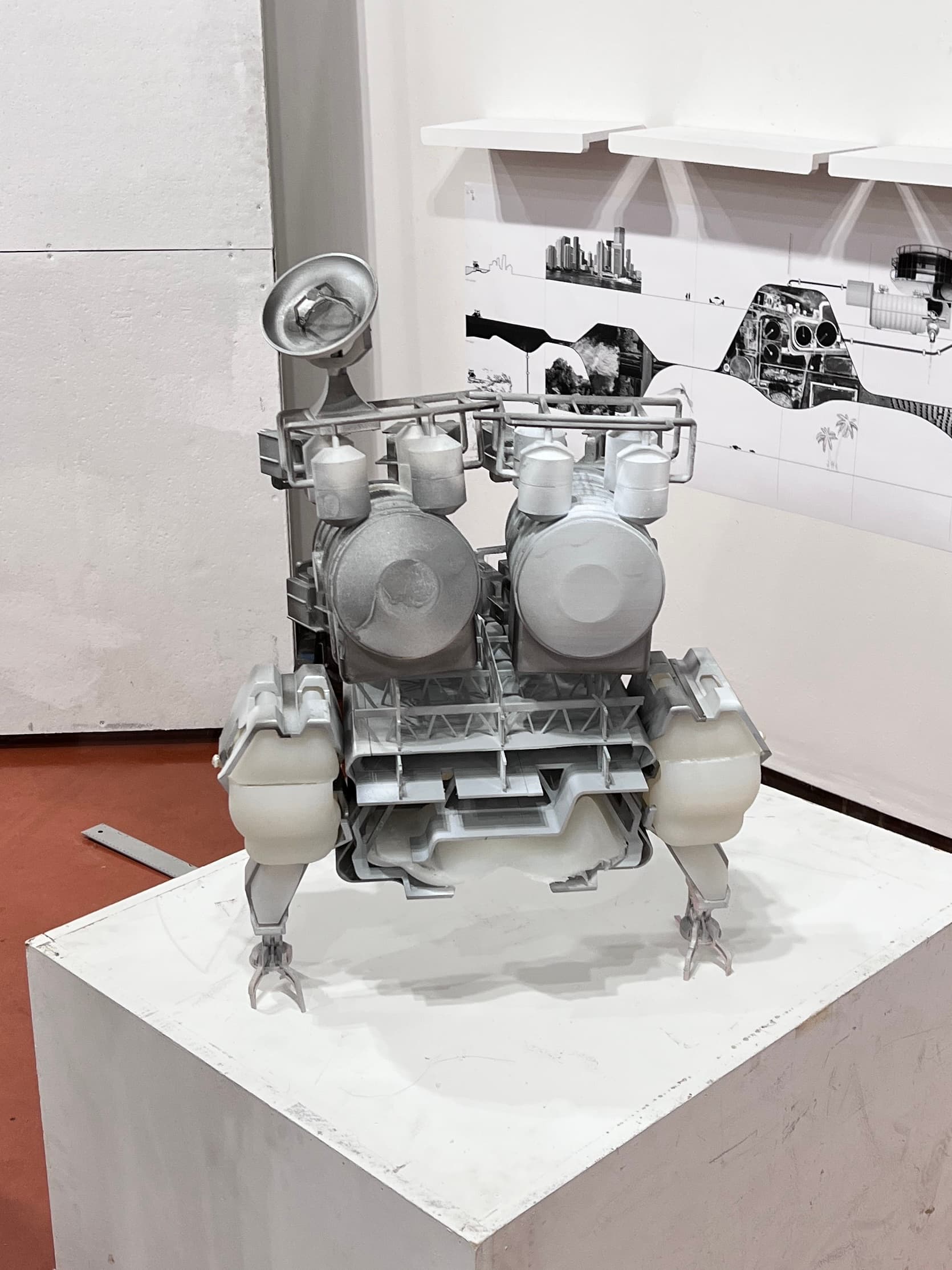
Using 100 training images, pixel centers are converted to rays with camera intrinsics K and camera-to-world matrices. Rays use a 0.5 coordinate offset, and are sampled between near=2.0 and far=6.0. Training perturbs samples within each interval, while inference uses fixed positions for consistent rendering.
RaysData precomputes all origins, directions, and RGB targets. The NeRF encodes 3D positions with L=10 (63 dimensions) and view directions with L=4 (27 dimensions), then uses two four-layer width-256 ReLU blocks with a position skip connection. Separate density (ReLU) and color (Sigmoid) heads predict per-sample radiance and density.
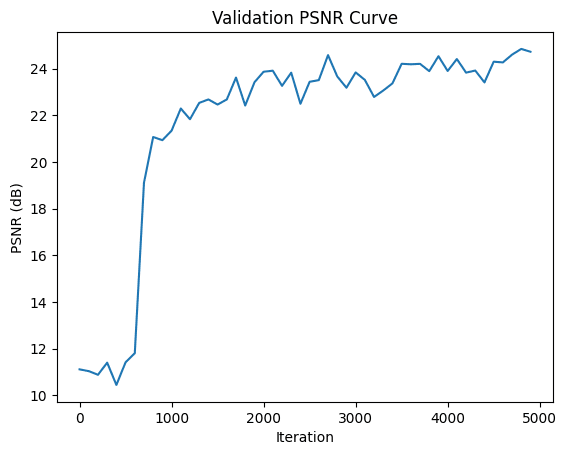
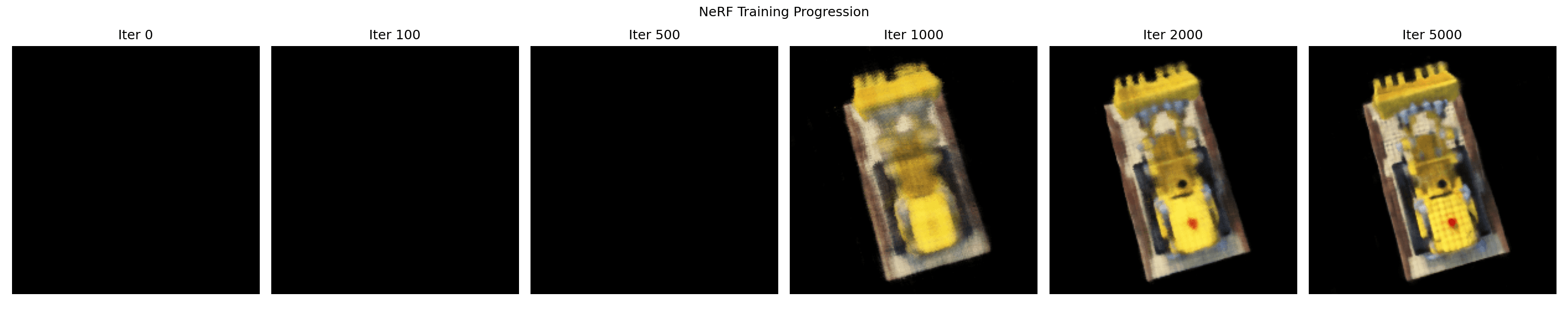
Volume rendering composites colors with transmittance-weighted accumulation. Adam (lr 5e-4), MSE, 10,000 rays/iteration, and 32 samples/ray trained for 5,000 iterations. PSNR rose from roughly 11 dB to ~21 dB near iteration 700 and finished around 24.8 dB, above the 23 dB target.